
See how a 500,000-tag SCADA system was successfully migrated to Ignition without interrupting plant operations.
The Situation
For many midstream operators, legacy SCADA systems remain deeply embedded in daily plant operations. While these platforms often continue to function reliably, they can limit scalability, carry large and growing licensing costs, and make future digital initiatives more difficult.
A large five-train midstream gas processing facility faced this exact challenge. Their existing Wonderware-based SCADA environment had served the plant for years but had become increasingly difficult to expand and modernize.
Leadership wanted to transition to a more flexible and scalable platform without risking operational stability. The decision was made to migrate the system to the Ignition platform from Inductive Automation.
The entire system transition needed to occur while the facility remained fully operational.
-Aug-18-2026-01-16-11-4881-PM.jpg?width=1024&height=576&name=unnamed%20(1)-Aug-18-2026-01-16-11-4881-PM.jpg)
The Challenge: Large-Scale Data Migration
Migrating a SCADA platform while a plant continues to operate introduces significant technical and operational risks.
In this case, the scope was substantial:
- Five operating gas processing trains
- Approximately 500,000 SCADA tags
- More than 750 operator view pages
- Continuous plant operations that could not be interrupted
- Strict requirements for data accuracy and validation
Every migrated tag and every screen element needed to behave exactly as expected before operators could rely on the new system.
The project required an approach that would ensure:
- Zero operational disruption
- Absolute data integrity
- Seamless operator adoption
Rather than relying solely on automated conversions, the project combined automation with engineering oversight to ensure accuracy and usability within the new system.
The TechStar & TAS Solution
TechStar and TAS designed a parallel migration strategy that allowed the new SCADA system to be developed, tested, and validated alongside the existing system before final operator transition.
Architecture Designed for Reliability
The Ignition deployment utilized four gateways in a redundant architecture:
- Redundant Frontend Gateways supporting operator visualization and user sessions
- Redundant Backend Gateways handling tag processing, communications, and historical data
This architecture provided:
- High availability
- Failover protection
- Scalability for future plant expansion
The result was a SCADA infrastructure capable of supporting the operational scale of a large multi-train gas facility while ensuring long-term maintainability.
Tag Validation and System Integrity
Because the plant remained online throughout the project, data validation was critical.
Every migrated data point had to be verified to ensure:
- Correct real-time values
- Accurate engineering units
- Proper alarm configuration
- Reliable historical logging
- Correct operator display behavior
The validation process included:
- Parallel system comparisons
- Operator review sessions
- Controlled testing of view pages and navigation structures
- Incremental commissioning of system components
This method ensured operators maintained complete trust in the system before relying on the new SCADA environment.
-Aug-18-2026-01-16-13-8405-PM.jpg?width=1024&height=576&name=unnamed%20(2)-Aug-18-2026-01-16-13-8405-PM.jpg)
Operator Experience Matters
Beyond technical migration, strong emphasis was placed on operator usability.
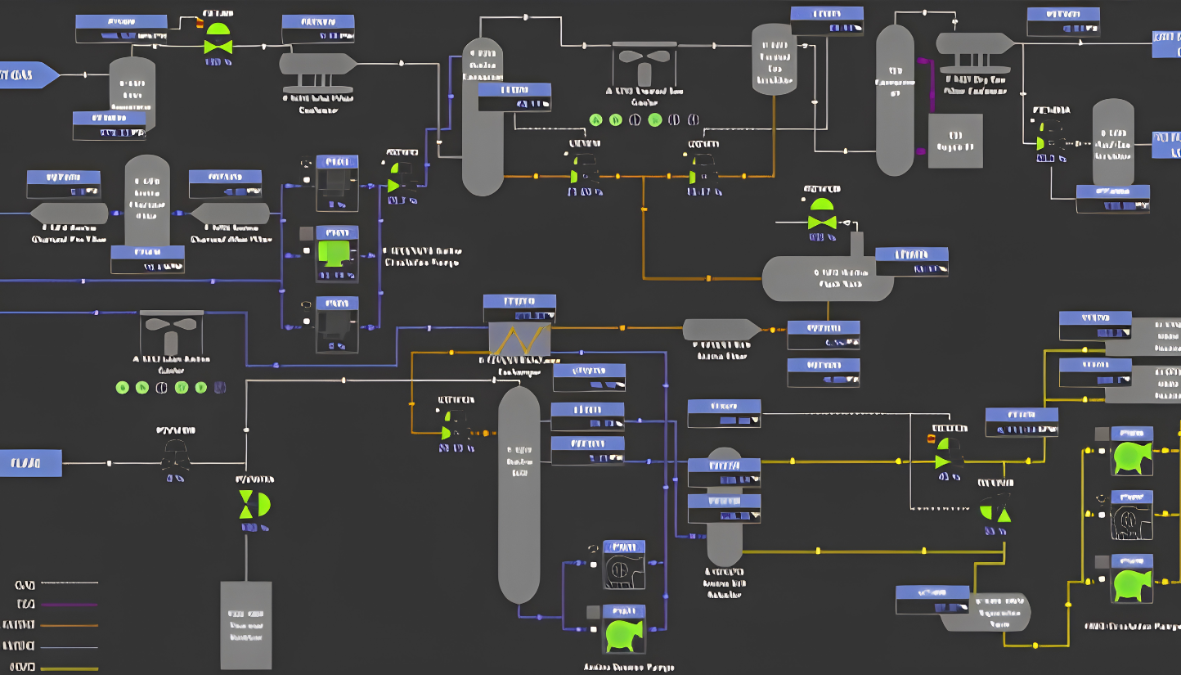
With more than 750 view pages, the system needed to maintain familiar workflows while improving clarity and consistency.
Enhancements included:
- Standardized the navigation framework and implemented integrated search capabilities to allow operators to quickly locate assets, alarms, and system views
- Optimized navigation workflows by reducing the clicks required to access critical screens and functions
- Improved overall screen performance through view optimization and efficient data loading strategies
- Implemented a structured ISA-style Layer 1–4 visualization hierarchy to provide clear operational context from enterprise overview down to equipment-level detail
- Standardized alarm and trend visualization components to ensure consistent operator experience
- Simplified layouts and visual structure to enhance operator situational awareness and reduce cognitive load
These improvements ensured that operators could transition smoothly to the new platform without disrupting day-to-day plant operations.
Zero-Downtime Execution
Perhaps the most significant accomplishment of the project was the complete migration without shutting down the plant.
Through careful architecture design and phased validation, the team was able to:
- Build and test the new system in parallel
- Validate data points while operations continued
- Transition operator usage incrementally
- Maintain uninterrupted plant production
For a facility of this size and complexity, this approach dramatically reduced operational risk while enabling modernization.
Results
The project delivered measurable operational and strategic benefits.
Operational Outcomes
- Successful migration of approximately 500,000 SCADA tags
- Deployment of 750+ Ignition view pages
- Implementation of a redundant four-gateway architecture
- Zero operational downtime during migration
Business Outcomes
- A modern, scalable SCADA platform
- Improved maintainability and flexibility
- Enhanced operator visualization capabilities
- Reduced long-term lifecycle risk
Most importantly, the customer was highly satisfied with the results, recognizing the project as a major step forward in the plant's digital infrastructure.
What This Means for Operators
Large-scale SCADA migrations often carry significant perceived risk, especially when facilities cannot tolerate downtime.
This project demonstrates that:
- Even extremely large SCADA systems can be migrated safely
- Parallel migration strategies eliminate the need for shutdowns
- Modern platforms like Ignition can support massive industrial environments
With the right engineering approach and project discipline, modernization can occur without compromising operational stability.
Why TechStar & TAS
Together, TechStar and Texas Automation Systems (TAS) bring process expertise and industrial automation capabilities together to solve complex applications where reliability, scale, and operational continuity are critical.
Our combined approach brings together:
- Deep Oil & Gas industry experience
- Proven SCADA and control system architectures
- Process instrumentation and application expertise
- Rigorous system validation methodologies
- Integration from the field device through the control system
- Close collaboration with plant operations teams
From instrumentation and controls to SCADA integration and system modernization, TechStar and TAS provide a more complete approach to industrial automation.
The result is an integrated solution designed to deliver measurable value while maintaining the operational confidence industrial facilities depend on.
Let's Talk
If your facility is facing:
- Rising costs to support your legacy SCADA platform
- Large data environment migration
- Concerns about downtime during migration
- The need for scalable industrial visualization
TechStar & TAS can help you modernize with confidence.
