
Overview
Maintaining visibility into sludge blanket levels is critical for wastewater treatment facilities looking to improve settling performance, reduce solids carryover, and maintain compliance throughout the treatment process. For one major wastewater facility, improving real-time insight into final settlement tank conditions became a key initiative to support operational efficiency and process reliability.
To improve sludge blanket monitoring and reduce the challenges associated with manual measurement and inconsistent readings, the facility implemented a continuous ultrasonic sludge interface monitoring solution across multiple settlement tanks.
Application
A major wastewater treatment facility launched an initiative to improve process visibility, strengthen sludge blanket monitoring, and support environmental compliance within its final settlement operations. As part of the project, the facility required a reliable continuous sludge interface monitoring solution capable of improving operational awareness across multiple settlement tanks.
-1.png?width=594&height=287&name=unnamed%20(6)-1.png)
Challenge
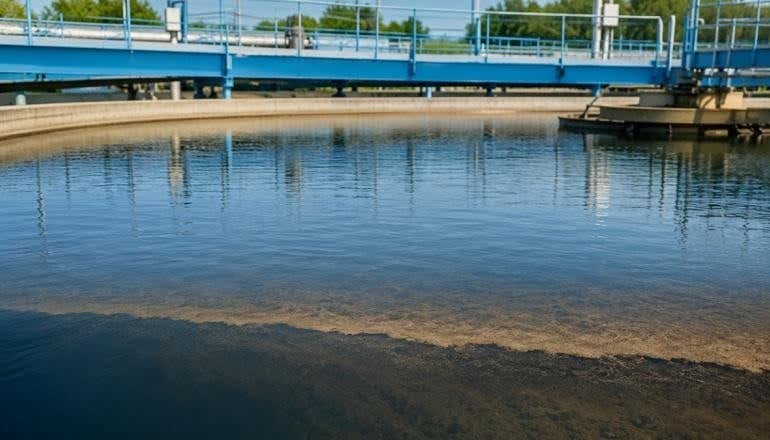
Maintaining accurate sludge blanket levels within final settlement tanks is critical to wastewater treatment performance. Limited visibility into sludge interface levels can lead to solids carryover, poor settling performance, reduced return activated sludge retention, and increased compliance risk.
The facility also required a monitoring solution capable of integrating into its existing PLC and SCADA infrastructure while operating reliably in harsh wastewater conditions. Traditional sludge monitoring methods often create challenges with maintenance, algae buildup, inconsistent readings, and limited real-time data for operators.
Solution
To improve process control and sludge monitoring performance, the facility installed continuous sludge interface monitoring systems across multiple final settlement tanks. The systems were integrated into the site's existing control infrastructure using local communication networks connected to the plant PLC and central SCADA system.
-1.jpg?width=1200&height=800&name=unnamed%20(1)-1.jpg)
The selected solution utilized advanced ultrasonic technology and digital echo processing algorithms to continuously identify and track sludge blanket interface levels in settlement tanks and sequencing batch reactor (SBR) systems.
The monitoring system also featured a self-cleaning underwater acoustic sensor designed to reduce algae buildup and maintain reliable long-term measurement performance in demanding wastewater applications.
Results
With continuous sludge blanket monitoring now in place, the facility improved visibility into sludge conditions throughout the final settlement process while helping reduce the risk of unwanted solids discharge events.
-1.png?width=402&height=265&name=unnamed%20(5)-1.png)
The system also helped operators improve return activated sludge retention and optimize process performance across the treatment operation.
By automating sludge interface measurement and reducing maintenance associated with manual monitoring and sensor fouling, plant personnel were able to spend less time troubleshooting instrumentation and more time focused on plant operations and process optimization.
Technology Highlight: Pulsar Sludge Finder 2
The Pulsar Sludge Finder 2 is designed specifically for continuous sludge blanket monitoring in wastewater treatment applications, including:
- Primary clarifiers
- Secondary clarifiers
- Final settlement tanks
- Sequencing batch reactors (SBRs)
Key capabilities include:
- Continuous sludge interface measurement
- Ultrasonic sludge blanket monitoring
- Advanced digital echo processing
- Self-cleaning sensor technology
- Reduced maintenance requirements
- PLC and SCADA integration
- Reliable operation in harsh wastewater environments
-2.png?width=411&height=285&name=unnamed%20(4)-2.png)
